

For U.S.-based marketing agencies, choosing between a WordPress multisite setup and a single site installation is not just a technical decision. It directly affects pricing, maintenance, scalability, and long-term support.
If you offer website builds, white-label WordPress solutions for agencies, or ongoing care plans, understanding this distinction helps you protect margins and reduce risk. It also positions your agency as a strategic advisor rather than just a design vendor.
In this guide, we will break down when to recommend WordPress multisite, when a single site is the smarter move, and how agencies can structure WordPress builds for profitability and scale.
Understanding WordPress Single Site
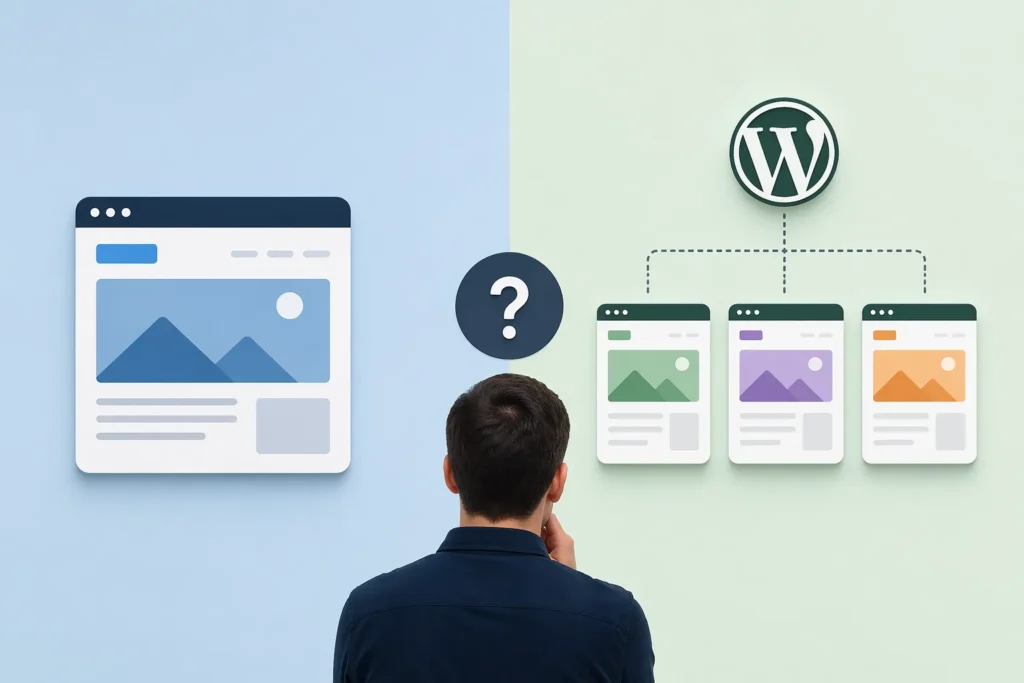
A single-site installation is the default WordPress setup. One database, one dashboard, one website.
For most small and mid-sized businesses in the United States, this is the right starting point.
When a Single Site Makes Sense
A single site is typically ideal when:
- The client operates one brand.
- There is no need for sub-brands or regional domains.
- The marketing team does not require separate admin access for multiple properties.
- The business model is straightforward.
For example, a local service company, a SaaS startup, or a single-location e-commerce store rarely benefits from the added complexity of a multisite setup.
From an agency perspective, single-site builds are easier to migrate, maintain, and troubleshoot. They are also easier to price consistently. If you provide WordPress migration agency services, a single site is usually faster to move and validate.
Operational Advantages for Agencies
Single-site installations offer:
- Simpler backups
- Isolated plugin conflicts
- Easier performance optimization
- Lower risk during updates
When agencies grow and begin managing 30, 50, or 100+ client sites, isolation becomes valuable. A plugin issue on a single site does not affect other clients.
If your agency has experienced problems with freelancers breaking staging sites or missing updates, this is often due to inconsistent single-site maintenance practices. Standardization matters
What Is WordPress Multisite?
WordPress multisite allows multiple websites to run on a single WordPress installation. Sites can exist as subdomains (e.g., site1.example.com) or as subdirectories (e.g., example.com/site1).
All sites share the same core files and database structure, but can have different themes and content.
Multisite can be powerful. It can also be misused.
When Multisite Is the Right Recommendation
Multisite is most appropriate when:
- A client manages multiple locations under one brand.
- There are franchise or partner networks.
- There are university departments, corporate divisions, or media networks.
- There is a need for centralized control of plugins and themes.
For example, a national brand with 40 franchise locations across the United States may benefit from a multisite setup. Corporate can control branding and plugins while allowing local teams to manage content.
In this case, multisite support becomes a specialized service. Not every developer fully understands database structure, domain mapping, or shared resources.
If you offer WordPress multisite support, you must ensure your team understands:
- Network-wide updates
- Super admin permissions
- Shared resource performance limits
- Backup and restore strategy
The Strategic Differences Agencies Must Consider
1. Risk Management
In a multisite environment, one misconfigured plugin can affect every site in the network.
In a single site setup, issues remain contained.
For agencies that promise uptime guarantees or performance SLAs, this distinction matters. According to research from Google, site performance delays as small as 1 second can significantly reduce conversions (Google/SOASTA Research, 2017). Shared environments increase the impact of performance issues.
If your client’s revenue depends on site speed and reliability, a single site is often safer unless centralization is required.
2. Migration Complexity
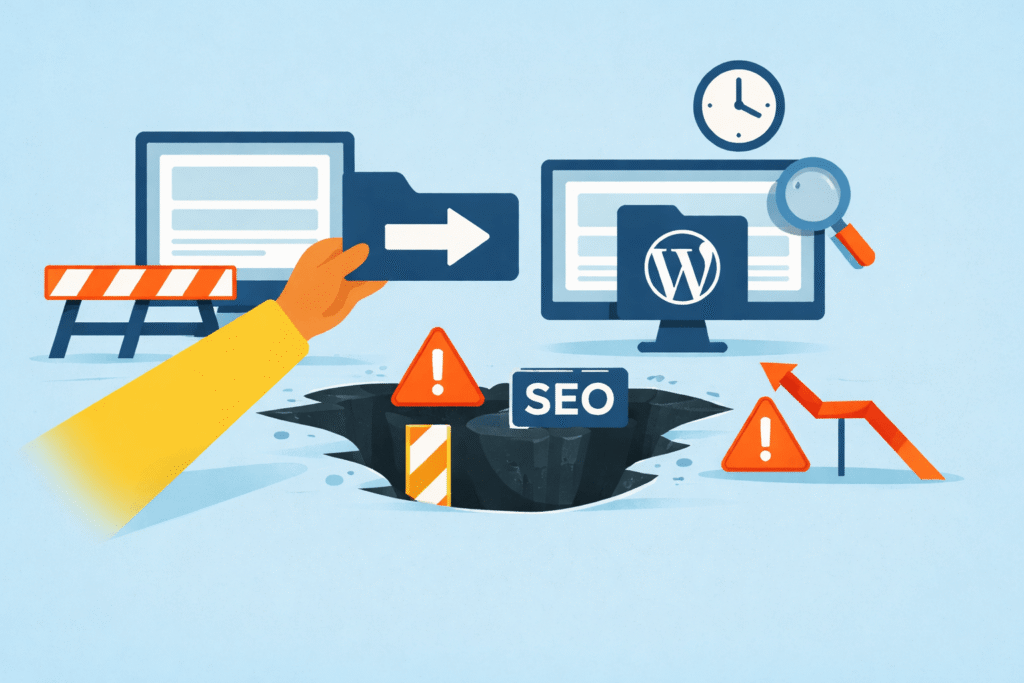
If you provide all-in-one migration multisite services, understand that migrations are more complex than single-site moves.
With multisite, you must account for:
- Domain mapping
- Serialized data in the database
- Network-wide file structure
- Subsite export/import handling
Single-site migrations are more straightforward and typically faster to complete. That means better margins for agencies offering fixed-price migration packages.
If your agency plans to scale WordPress migration agency services, standardizing on single-site builds whenever possible simplifies operations.
3. Maintenance and White Label Support
Many agencies reach a growth ceiling when website maintenance becomes unpredictable.
Hiring freelancers often creates:
- Inconsistent coding standards
- Delayed responses
- Lack of documentation
- Missed updates
This is one reason white-label WordPress solutions for agencies have grown in demand. Agencies want reliable backend teams that manage updates, staging, QA, and development without client-facing friction.
With multisite, support requires deeper expertise. You need developers who understand network permissions, staging duplication for subsites, and database-level troubleshooting.
With a single site, processes are easier to document and replicate across dozens of clients.

When Agencies Should Avoid Multisite
Multisite is often over-recommended.
Avoid recommending it when:
- Clients have unrelated brands.
- Clients may sell or separate business units in the future.
- Hosting resources are limited.
- You cannot guarantee advanced technical oversight.
A client who plans to spin off divisions later will face separation challenges. Extracting one site from a multisite network is more complex than transferring a single WordPress installation.
If your agency focuses on growth and exit-ready website builds, single-site architecture usually offers greater flexibility.
Multisite for Agency-Owned Website Networks
There is one scenario where multisite makes strong business sense for agencies.
If your agency owns and manages multiple sites under one system, for example:
- City-specific lead generation sites
- Niche microsite clusters
- Template-based franchise websites
Then, multisite can improve operational efficiency.
Centralized updates reduce maintenance time. Shared plugin control ensures consistency.
But this only works if your development team is structured and disciplined.
How This Impacts Agency Profitability
Many agencies underestimate the cost of WordPress website builds.
Common mistakes include:
- Underpricing development
- Over-relying on freelancers
- Failing to productize support
- Treating every site as custom
If you want to grow an agency that sells WordPress websites, your model must be repeatable.
Single-site builds are easier to standardize into packages.
Multisite builds require higher pricing and more defined scopes.
This is where agencies often benefit from outsourcing development to a reliable partner instead of juggling multiple freelancers.
Should Marketing Agencies Outsource WordPress Development?
This question often arises when agencies scale beyond 5–10 websites per month.
Outsourcing can provide:
- Predictable delivery timelines
- Consistent QA
- Experienced WordPress developers
- Lower management overhead
However, the partner must understand agency workflows, not just WordPress code.
For example, Work Hero provides agencies with both Figma web design and experienced WordPress development in one place. This reduces coordination gaps between design and build phases. It also eliminates the risk that unreliable freelancers will miss deadlines.
When agencies handle builds internally without structure, margins shrink. When they outsource to a reliable white-label WordPress partner, they regain focus on strategy, client acquisition, and upsells.
Technical Checklist Before Recommending Multisite
Before recommending multisite to a client, confirm:
- The client needs centralized control across multiple related sites.
- The hosting environment supports multisite configuration.
- Your support team understands network-level troubleshooting.
- Backup and staging workflows are documented.
- There is a clear long-term content governance plan.
If these criteria are not met, recommend a single site.
The Bottom Line for U.S. Agencies
Most agencies should default to a single site unless there is a strong strategic reason to centralize.
Multisite is a powerful tool. But it requires technical maturity and disciplined maintenance.
If your agency is still refining processes for WordPress website builds, client handoffs, staging workflows, and maintenance plans, start with single-site standardization.
Once your backend systems are strong, you can selectively introduce multisite for the right clients.

Build Smarter WordPress Systems With the Right Partner
If your agency is managing WordPress builds, migrations, or multisite support, the structure behind your delivery matters as much as your design quality.
Work Hero helps agencies across the United States handle web design and development in one place. From Figma design to experienced WordPress development, agencies can eliminate unreliable freelancers and deliver consistent, profitable website projects.
If you are evaluating whether to standardize on single-site builds, expand into WordPress multisite support, or outsource development to scale, the right technical partner makes the difference.
Learn how Work Hero supports agencies with reliable WordPress development and white-label solutions at: https://www.useworkhero.com/
The right architecture decision today protects your agency’s margins tomorrow.